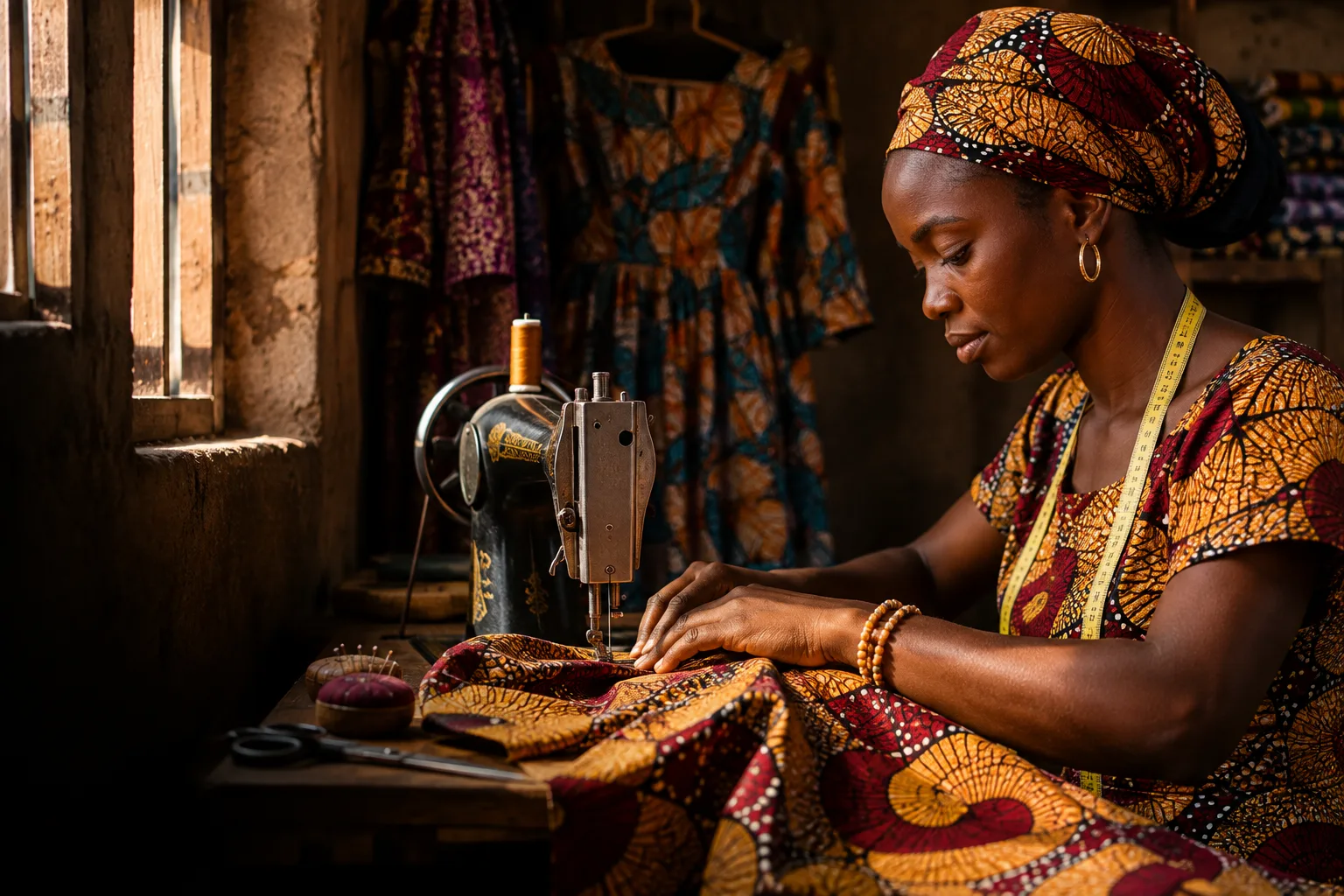
Somewhere in West Africa, a young woman completes a two-year tailoring apprenticeship. She can cut, sew and finish a garment to a standard any boutique would accept. She has her certificate. Then nothing happens. She has no machine of her own, no access to credit, no buyer beyond her neighbourhood. A year later, her skills are still there. Her confidence is not.
Her story is repeated across the continent, in workshops, vocational schools and training centres. We often ask what young Africans should be taught. It is a fair question, but it is often the wrong one to ask first. Many have already been taught. The real question is what happens the day after the training ends.
The missing step
Training without capital produces plans, not businesses. Between a skill and a livelihood lie steps that no classroom covers: an honest assessment of readiness, a first contract, a small loan or grant, access to buyers, and someone to call when the first month goes wrong. When these steps are missing, talent waits. When they are in place, one trained person can become an employer.
Recognise what is already there
Africa's young people are not a problem to be managed. A great many of them already work, often in the informal economy, with skills learned outside any institution: in the workshop of a master craftsman, at the market, in a phone repair stall, on a farm. These skills are real. What they need is to be verified and recognised, not taught again from the beginning.
Measure what matters
For years, success has too often been counted in the number of people trained. That number says little about lives changed. Better questions are simple: how many people now earn a stable income? How many businesses are still open after two years? How many jobs have they created for others?
Measuring transformation rather than participation changes the behaviour of everyone involved: funders, training institutions, employers and governments. It moves attention from the classroom to the marketplace, which is where young people's futures are decided.
From one job to many
The goal is not one job for each young person. It is a young person who hires. A tailor with her own workshop takes on three apprentices. A mechanic who gets his first equipment loan employs two assistants within a year. The same logic applies to the land: restored landscapes create work in nurseries, processing, storage and transport, if trained people are connected to it.
This is the conviction behind Advance Africa, a human capital initiative connected to the Great Green Wall Foundation of Africa. Its approach is direct: start with people who are already trained, assess them, place them, finance them, and accompany them until they earn and employ others.
Africa's young people have done their part. They have learned. Our part is to make sure that what they have learned leads somewhere.